 GLASTONBURY
 Glastonbury and the Shroud of Turin Adrian Pearse
[This is one of six reports covering past Antiquarian Society lectures for which the Consoc newsletter had no space at the time. We caught up in Newsletter 141. —Ed.]
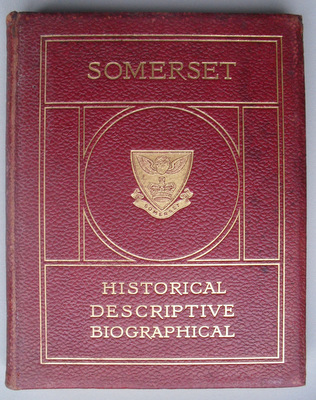
A talk by Paul Ashdown
A sumptuously produced but now rarely seen book — Somerset, Historical, Descriptive, Biographical — appeared in 1908, written by Thomas Escot. It mentioned a connection between the Shroud of Christ and Glastonbury through the agency of Joseph of Arimathea. As Paul Ashdown told the Antiquarian Society, here is a reference to a legend seemingly lost.
Escot, born near Taunton to an ancient Somerset family, became aware of the legend during his childhood in the 1850s. The Shroud of Turin was not photographed until 1878, when negatives first revealed the famous image.
Paul Ashdown in a paper in the Downside Review in 2003 had touched on the matter and its connection with recusant tradition, and resonances with Melkin’s Chronicle in John of Glastonbury. Two mediaeval references to the shroud and a connection to Glastonbury have surfaced: one written about 1200 in France makes the link, and a second, a life of Joseph of Arimathea written in 1502 [quite possibly by a monk of Glastonbury], fits with the cult of Joseph prevalent at this time.
Adam Stout also suggests links between the Shroud story, the story of the cloth of Syndonia and the gospel of Nicodemus, produced as chapbooks in 1775. They derive from earlier versions, which contain detail found only in the Glastonbury branch of the tradition. [2012 September 21]

