GLASTONBURY
 Convicted Baltonsborough boy makes good in Australia
— result: his family in Somerset ends up owning the Abbey
Adrian Pearse, Jim Nagel
Owen Mace, a descendant of Austins who emigrated from Baltonsborough to Australia a century ago, provided an outline of the family story in an illustrated talk on October 9 [2014]. He spoke to about 35 people in Abbey House, an appropriate venue because the Austins were its last private owners.
“Australia’s prosperity rode on the sheep’s back” — for decades, school histories taught this aphorism about the wool business. The statement certainly applied to the Australian Austins.
Captain James Cook began Britain’s claim to Australia in 1770, and after the loss of the American colonies in 1776 it was seen as a substitute destination for deported convicts.
James Austin was baptized at Baltonsborough on August 13 in 1776, the second son of John Austin, a farmer, and his wife Sarah (née Higgens*). As a second son, his prospects in this locality were poor. Australia thus was an attractive promise to him. But his father could not afford the fare.

So James and his friend John Earle organized free passage. In 1802 they stole six straw beehives and 100 pounds of honey from James’s uncle Peter Higgens. The Wells Assizes sentenced them to seven years’ transportation. According to family lore, the judge was none other than Peter Higgens.
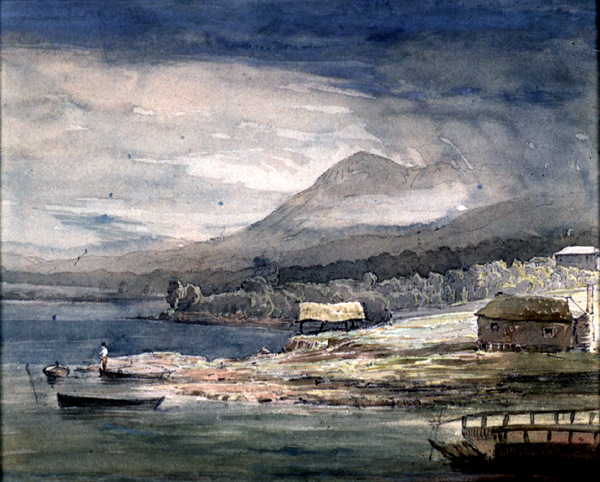
Thus they arrived at Hobart in Tasmania (at that time called Van Diemen's Land), after first landing at Port Phillip in Victoria, which had proved unsuitable. James worked off his sentence by 1809, and he and John Earle established a ferry across the River Derwent at Hobart, rowing 20 cattle at a time across 600 yards of water. From this modest beginning, James set up a 300-acre farm called Roseneath. By 1823 he claimed to have the largest orchard in the colony and much livestock. He died in prosperity in 1831, and John Earle in 1840.
The Australian Dictionary of Biography says James was almost illiterate and “wealthy but eccentric”; he never married and never returned to England. [* At this point, with another James coming up, a glance at the Austin family tree might help. —Ed.]
Back at Baltonsborough, the Austin family by then owned Tilham Street Farm: the purchase was probably enabled by money James sent home.

Left: Thomas Austin built the 42-room Barwon Park mansion of local bluestone in a sweeping rural landscape near Winchelsea in western Victoria. It is said his wife Elizabeth Harding wanted it to be bigger and grander than Abbey House in Glastonbury: it’s two feet wider and two feet longer. Thomas died shortly after completing it in 1871. Elizabeth lived on there for 40 years and is noted as a founder of Austin Hospital in Melbourne and the Austin Homes for Women in Geelong. Today, the National Trust of Australia owns Barwon Park; it is substantially unaltered.
Right: James Austin built Avalon Homestead, on Corio Bay near Geelong (about 35 miles southwest of Melbourne). After a fire in 1870, a nephew rebuilt the single-storey house in basalt and freestone. A carved Tudor rose from Glastonbury Abbey — James by then owned the Abbey — is set into the covered entry. Bluestone stables for the Austin racehorses stand behind the house. The land remained in Austin hands for many years but is now subdivided; part is now Avalon Airport. *Geelong Grammar School (where Owen Mace was a pupil) owns the homestead and some few acres around it, and since 1998 leases it to Avalon College, a boarding school for Asian language students who want to enter the Australian educational system.
Four of James’s Austin nephews — Solomon, Josiah, another James (1809–96, the speaker’s great-great-grandfather) and Thomas — left Baltonsborough and sailed out to Australia with their uncle’s help, arriving shortly after he died. They established Tor Hill Farm of 10,000 acres in sheep country.
James and Thomas took 500 sheep over to western Victoria and drove them up the Barwon River into some of the best land in the state. Nearby, James established an estate he called Avalon and expanded to 30,000 acres. He was the second mayor of Geelong, in 1850–51.
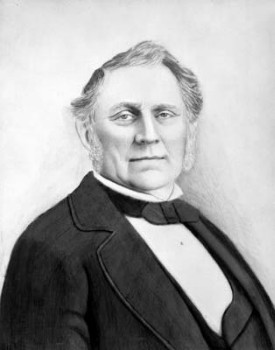
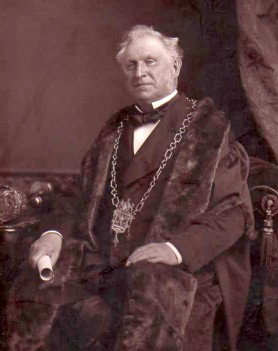
In 1854 James returned to Glastonbury with members of his family and lived in Somerset House in Magdalene Street, which he renamed Australia House for a time. He was mayor of Glastonbury five times between 1858 and 1887. He bought Abbey House and the ruins in 1864.
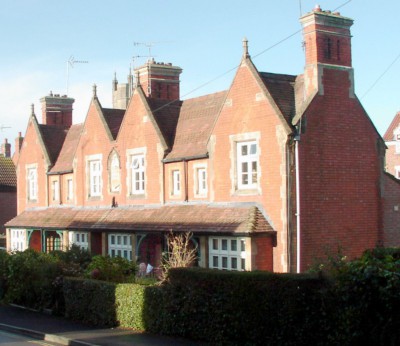
His son Stanley (the founder of Austin & Bath, as the solicitors in Chilkwell Street were called for generations) sold Abbey House at auction in 1907. By this time the Austins had married into locally prominent families: James’s daughter Annie married Reginald Porch.

Back in Australia, Thomas Austin, who loved shooting, asked a cousin in 1859 to send him 20 wild rabbits from England. He could find only six pairs, so also sent some domestic rabbits. The resulting hybrid was apparently ideal for the Australian climate. They escaped and rapidly spread across the continent as a devastating pest.
His niece Mary, James’s eldest living daughter, married William Hose Bullivant. He became hugely successful with sheep, using a breeding strategy to double the wool take. Bullivant and the Austin family were major prizewinners in various aspects of the industry. Wool remained the foundation of the Australian economy until the 1950s. The families were also noted for thoroughbred racing horses.
And recent generations? By email the speaker said his father, Norman Mace, born in Nottingham, went as a surveyor to Sarawak. Escaping the Japanese, he worked for the Australian Joint Intelligence Bureau (“i.e., he was a spy”) until his death in 1968.
Owen Mace studied electronic engineering, gained a PhD in physics and was an academic at Melbourne University for 17 years and then Adelaide. Later he travelled the world for British Aerospace Australia, then ran an IT company and now researches the Austin history.