 GLASTONBURY
 The Great War in 3D photos Adrian Pearse
An illustrated talk by Jim Woodcock at the Glastonbury Conservation Society AGM
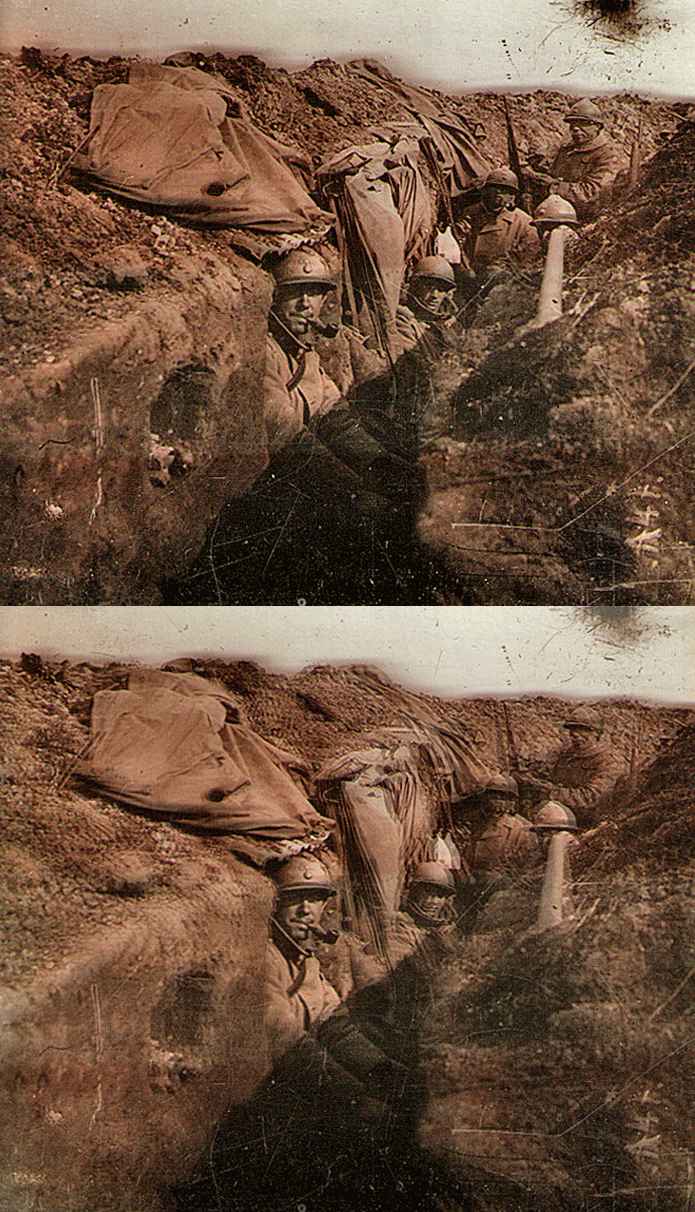
Stereo photography was in widespread use from the invention of photography in the 1840s, throughout the rest of the 19th century and into the first part of the 20th.
Marking a century since the outbreak of the Great War, Jim Woodcock showed stereo photos of that conflict to the society’s 2014 AGM after the business part of the meeting on November 21.
A wide range of equipment was used to view stereo photos in that time: simple hand-held viewers were common, and wealthy households could afford cabinet carousel stereoscopes. The standard format in use during this period was a dual image pasted on stiff card 7 × 3 ½ inches.
Jim has converted a selection of original stereo images to a modern polarizing system, and added modern stereo views of some of the locations. Most of these are from the series of views from the Great War produced by the company Realistic Travels, and many of these were photographed by the proprietor, Hilton Girdwood.
The set of photos is thoroughly Anglo-centric and primarily concerned with the British sector of the Western Front. But there are also images from other theatres of operation, such as Gallipoli and East Africa, as well as naval and aerial aspects of the conflict.
Jim’s introduction detailed the national alignments that unfolded as war was declared across Europe. Then his stereo images showed the initial operations at Mons and the Marnes, and followed the development of the trench system from the English Channel to Switzerland by late 1914.
The futile Gallipoli campaign took place in 1915, as well as Zeppelin raids and the use of gas. In 1916 came Verdun and the Somme, conscription and the appearance of the tank.
1917 saw revolution in Russia, and the entry of the USA to the conflict, with notable actions at Arras and Messines.
In 1918 the German spring offensive was stalled and then reversed as American troops poured into France, eventually resulting in the armistice in November 1918.
Jim concluded with a selection of views reflecting wider aspects of the war, as well as his personal reflections encapsulated in poetry of the period.
