 GLASTONBURY
 Somerset defences in wartime, built hastily in 1940 Adrian Pearse
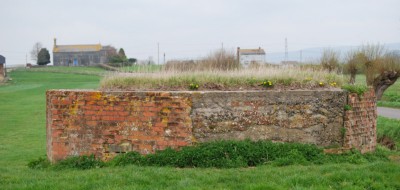
Richard Raynsford has been making a detailed study of the Second World War defences in Somerset, with particular interest in the section of “Stop Line” between Wells and Midsomer Norton. He talked about his work (which earned him an MA degree) and showed slides to our meeting on February 26.
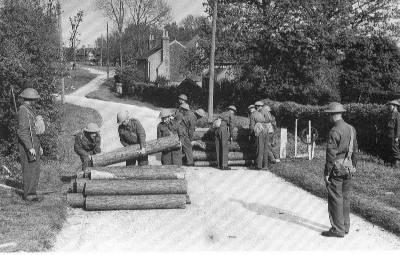
The threat of a German invasion prompted a building campaign from June to September 1940: various defensive works designed to impede any invading forces. A major feature was a series of “stop lines”. Somerset had the Taunton Stop Line and the Green Stop Line, running from the coast at Highbridge and turning to the north of Bristol, though it was never completed. It follows the Brue across the Levels to Godney. South of Wells a large ditch was dug across the Bishop’s park.
The line was defended by pillboxes of two main types (Type 24 and Type 26) at strategic points. These were normally constructed of concrete with a brick outer skin acting as shuttering; they were camouflaged in various ways. Pillboxes were supplemented by anti-tank obstacles such as cubes of concrete, ditches and “hairpins” — iron rails slotted into concrete sockets set in roads. Examples of pillboxes, cubes and hairpin sockets are well preserved, many in situ, along the slopes above Dinder.
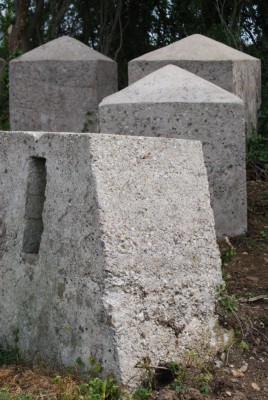
From here the line ran northeast to Maesbury in the form of an anti-tank ditch. At the site of Rocky Mountain Nursery (between the old Mendip Hospital and Oakhill) traces survive of a fuel depot and some cylinder anti-tank blocks. Along the section near Binegar, Chilcompton and Midsomer Norton, cubes were used along with a ditch. Wallbridge, near Frome, has examples of pyramid-shaped anti-tank blocks, known as “pimples”.
In addition to these linear defences were many other special constructions or features, such as the “starfish” decoy sites around Bristol and anti-landing mounds on the Blackdowns.
Although comparatively recent in construction many of these features are very vulnerable, due to poor-quality building materials combined with neglect and decay. The efforts of Richard and others to record them are therefore all the more valuable.
