GLASTONBURY
 Victorian town was in transition too, as local ironmonger wrote in 1890 JN
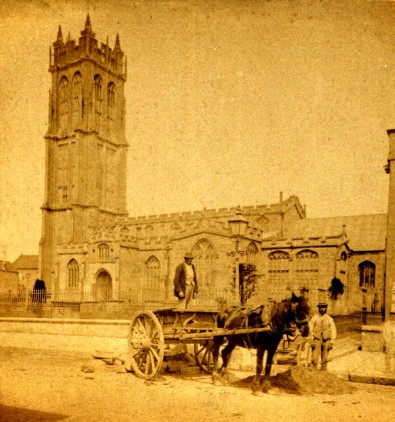
From stagecoach to railway, from cholera to effective drains and clean water, from illiteracy to new schools, from oil lamps to gas lighting, from mud tracks to clean pavements — these were some of transitions described in the History of Glastonbury During the Last 40 years, written by an articulate local ironmonger in 1890.
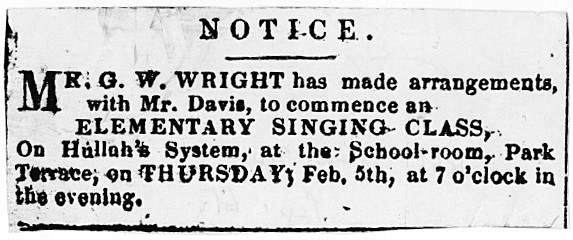
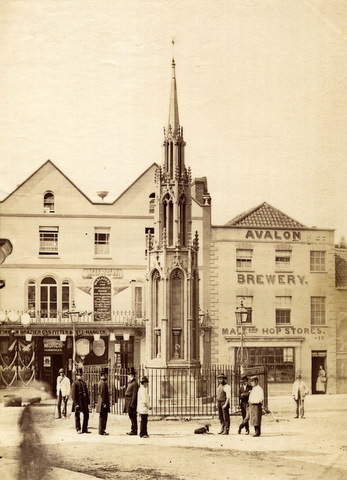
That was G. W. Wright, whose family business was until 1970 on two floors of the building today occupied by the Hundred Monkeys cafe, with living quarters on two floors above and builder’s yard behind. The name Wright can still be seen in mosaic at the entrance.
Wright was a lifetime pal of J.G.L. Bulleid, the solicitor, mayor and Antiquarian Society founder.
John Brunsdon read Wright’s history to the Conservation Society’s meeting on March 26, using one of the only extant copies, and a fuzzy photocopy at that. It is to be reprinted as a booklet.
Wright writes scathingly about the borough council’s reluctance to build proper sewers, despite cholera raging in towns not far away. This was also the era of hot debate leading to the building of St John’s and St Benedict’s schools. One councillor quoted by Wright could not see why parents should send their children to school.
In the end, “good men overcame prejudice and obstruction to the betterment of the community,” said John.
Here are two excerpts from Wright’s history, written 110 years ago:
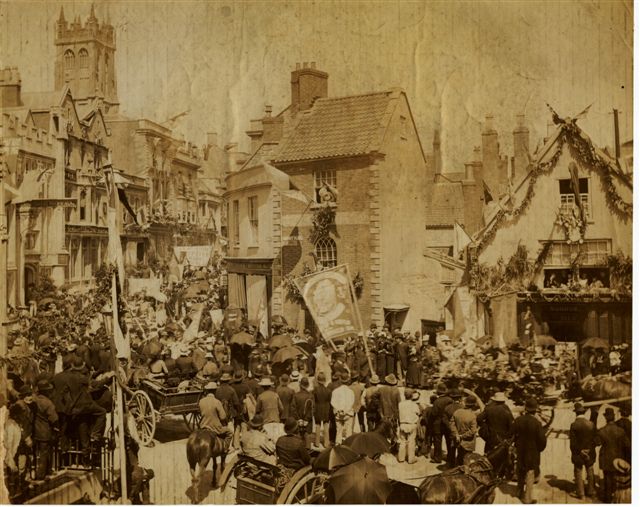
Amid High-street stench, doctor and daughter die of cholera
And now comes the crisis. The Council are scolded, admonished, begged to be stirring, and put the town in good order. The cholera is coming.
“As early as April 1865 [the editor of the town’s newspaper] wrote, “A voice comes to us from the continent, which says as plainly as words can speak, ‘Be clean!’ How easily it may now be remedied if the Council will but awake from their lethargy. ... The cholera is approaching, and High-street is still undrained. Still within the houses, or by their walls close beneath the pavement or the floor, defective from long neglect, and letting out in various parts the gases that generate disease, runs the gutter which the Authority calls a drain, and which their neglect has allowed to remain until cholera is at the door.” ...
And now, in the midst of the plague, the rumour flies that the doctor, Mr Malton, is down with it. In attending others, he has been seized himself and soon is lying dead, and his heroic daughter nursing her father has caught it and is dead also. ...
In August fever is raging in Landmead. At the back of houses in High-street the stench of pigs is unbearable, and one inhabitant is down with typhoid. Another, a member of the Council, is unable to attend as he is suffering from illness from the same cause. ...
Send children to school? Why? They can work
Hill Head was the most ignorant and the most demoralized portion of the parishes. There were 51 children in that district and only eight at school. [Mr Bulleid] could point to a family of eight, and of them not one could read or write.
One member [of the Council], true to his custom, said he could not see why parents should send children to school if they were old enough to work. At last, in February 1872, inspectors came. ...