 GLASTONBURY
 Bees and mankind: they give us far more than honey Richard Montagu
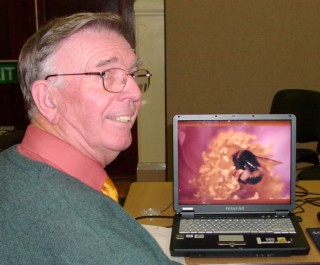
David Charles’ talk following the AGM on November 27 was fascinating. He introduced us to the world of bees through the red mason bee and explained that the value of bees is far greater than their products of honey and wax. It is now realized that their most important role is pollination.
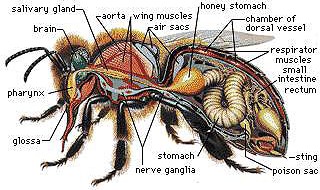
He introduced us to various species of bees, starting with the leaf-cutter bee, responsible for all those lumps taken out of your rose leaves. They use these carefully extracted pieces to build nests in which they lay their eggs and leave food for the pupating bees. These solitary bees are at the lower end of the bee hierarchy. They collect pollen on their bristles; the higher bees have leg sacs.
This brought us on to bumblebees, which are classed as social bees. Only the queen survives the winter, often in a compost heap; she starts the next year’s colony in the spring.
The honeybee maintains one of the most advanced of the insect communities. David showed us how feral communities survived and then took us back in time to the early days of honey-gathering. Wren’s first architectural project, well before St Paul’s Cathedral, was an octagonal beehive with windows to observe the bees. Straw skeps were one of the first hives; beekeepers using these hives would often kill off a large proportion of their bees in the process of gathering the honey. David showed an interesting picture of a wall in Lovington, near Castle Cary, containing bee boles — recesses that contained the skeps and sheltered them from the elements.
A digression took us into the world of bee lore. When bees swarmed people would “tang” them — beat a metal instrument to facilitate the collection of a swarm. Then there was “telling the bees” — a traditional requirement to visit the hives and inform the bees of the death of their master or someone within the family.
David brought us into the present through the Revd L. L. Langstroth, who discovered “bee space”: he found that the honeybee will not produce comb in small areas in the hive which they use as corridors. From this he developed, in 1852, the type of hive commonly used today with their removable frames of comb, making it easier for the beekeeper to control the hive and its development.
He then introduced us to a variety of flora and their role in the life of the honeybee. Each has a particular function in honey and pollen production, which he explained in detail. The message I came away with was to plant an area of my garden with borage.
Lastly David told us about the varroa mite that has been imported from the Far East; it was first reported in this country in 1992. Besides sucking the life blood out of its bee host, it spreads disease. Research is being undertaken to try to develop a strain of bees resistant to the mite, but the ultimate prevention is good housekeeping and best practice by the beekeeper.
This was an absorbing and informative talk, and my impression was that we had had time to experience only an introduction to the subject, so I look forward to any future talks that we may be able to persuade David to give.
